There are mornings when your body doesn’t ask for excitement. It asks for steadiness. Something warm. Something familiar. Something that quietly says, you’re going to be okay today.
For many of us, that feeling arrives in the form of oats.
Oats aren’t trendy. They don’t shout for attention. Yet, across cultures and generations, they’ve remained a quiet constant—especially during times when the body and mind both need grounding. When life feels rushed, heavy, or emotionally loud, oats offer a kind of edible calm that starts working long before the bowl is empty.
This isn’t about rules or rigid nutrition talk. This is about listening to what oats do to your body when they become part of your rhythm.
The Comfort Effect: Why Oats Feel So Grounding
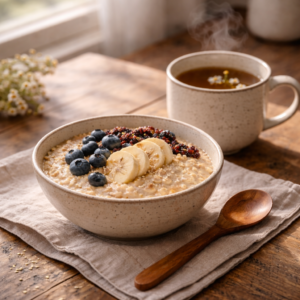
There’s a reason oats feel comforting beyond taste. Their texture, warmth, and slow-digesting nature send subtle signals to your nervous system. When you eat oats, especially in a warm bowl, digestion slows down. That slower pace tells your body it’s safe to relax.
Oats are rich in a type of soluble fiber that forms a gentle gel in your digestive system. This slows the release of sugar into your bloodstream, which helps avoid energy crashes and sudden mood dips. Instead of sharp spikes followed by fatigue, oats support a steady, even flow of energy—exactly what your body craves when you’re anxious, tired, or overwhelmed.
Many people notice that oat-based meals feel “settling.” Less jittery. Less reactive. That’s not coincidence—it’s biology meeting comfort.
A Heart That Likes Routine
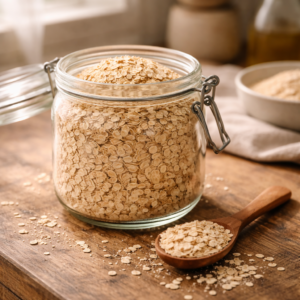
When oats show up regularly, your heart quietly benefits.
Inside oats is a special fiber that helps manage cholesterol by binding to it during digestion. Over time, this supports healthier blood flow and reduces strain on the heart. But beyond the science, there’s something deeper here: foods that digest slowly reduce stress on the body as a whole, including your cardiovascular system.
Oats also contain minerals that help regulate heartbeat and muscle function. When your body is under constant pressure—emotional or physical—these nutrients matter more than we realize. They support balance, not extremes.
A heart doesn’t thrive on chaos. It thrives on consistency. Oats understand that.
Digestive Ease, Not Digestive Drama

Digestive discomfort has a way of affecting mood. Bloating, irregularity, or heaviness can quietly drain your energy and focus.
Oats offer both soluble and insoluble fiber, working together like a calm, coordinated team. One slows digestion to help nutrient absorption, while the other supports smoother bowel movements. This combination helps keep your gut moving without irritation.
There’s also a gentler side to oats: they feed beneficial gut bacteria. A healthier gut environment often leads to better digestion, improved immunity, and—surprisingly—more stable moods. When your gut feels calm, your mind often follows.
For many people, oats become a “safe food” during stressful periods because they’re predictable and kind to the system.
Feeling Full Without Feeling Heavy
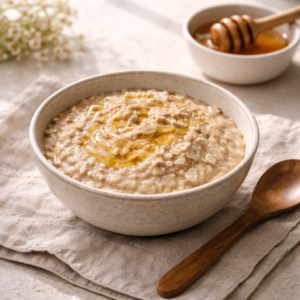
One of the most frustrating emotional food cycles is eating, feeling full for a moment, and then crashing into hunger or cravings shortly after.
Oats help break that pattern.
Their fiber and natural carbohydrates create a feeling of fullness that lasts. Not the uncomfortable, weighed-down kind—but a steady satisfaction that keeps you from constantly reaching for snacks. When you’re emotionally drained or mentally busy, that kind of fullness can feel like relief.
Protein naturally present in oats also plays a role here. It supports muscle maintenance and metabolism while helping you stay satisfied longer. This balance is especially helpful on days when your energy feels fragile.
Blood Sugar Stability = Emotional Stability
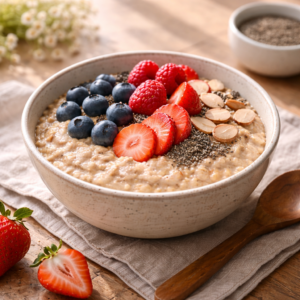
Blood sugar swings don’t just affect energy—they affect mood, patience, and focus.
Oats slow down how quickly sugar enters your bloodstream. That means fewer spikes, fewer crashes, and fewer moments where hunger turns into irritability. Over time, this steady release of energy can support better emotional regulation, especially for people who feel shaky or unfocused when meals are skipped or unbalanced.
This is one reason oats are often recommended for people trying to create more structure in their eating habits. They don’t demand perfection—just consistency.
The Quiet Nutrition Inside Oats
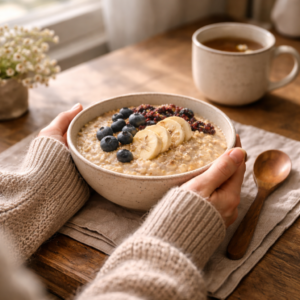
Oats may look simple, but they quietly deliver a wide range of nutrients your body relies on daily. They provide minerals that support muscle function, oxygen transport, immune health, and energy production. They also contain plant compounds that help calm inflammation inside the body.
This matters because chronic inflammation often shows up as fatigue, joint discomfort, brain fog, or mood changes. Foods that gently reduce inflammation can make a noticeable difference over time—without dramatic interventions.
When Oats Might Not Feel Right
Even gentle foods aren’t universal.
Some people experience digestive discomfort with oats, especially if they have sensitivities or digestive conditions. Others may react to proteins in oats or to cross-contamination from grains processed nearby. If oats leave you feeling bloated, heavy, or uncomfortable, it’s okay to listen to that signal.
Comfort food should feel comforting—physically and emotionally.
Bringing Oats Into Your Day, Gently

Oats don’t need to be dramatic. They fit into your life quietly.
They can be warm or cold, sweet or savory, blended into drinks or baked into meals. Some days they’re breakfast. Other days they’re a calming snack or a grounding evening bowl. Their versatility is part of their magic.
The key is intention. When oats are eaten slowly, without distraction, they become more than food. They become a pause.
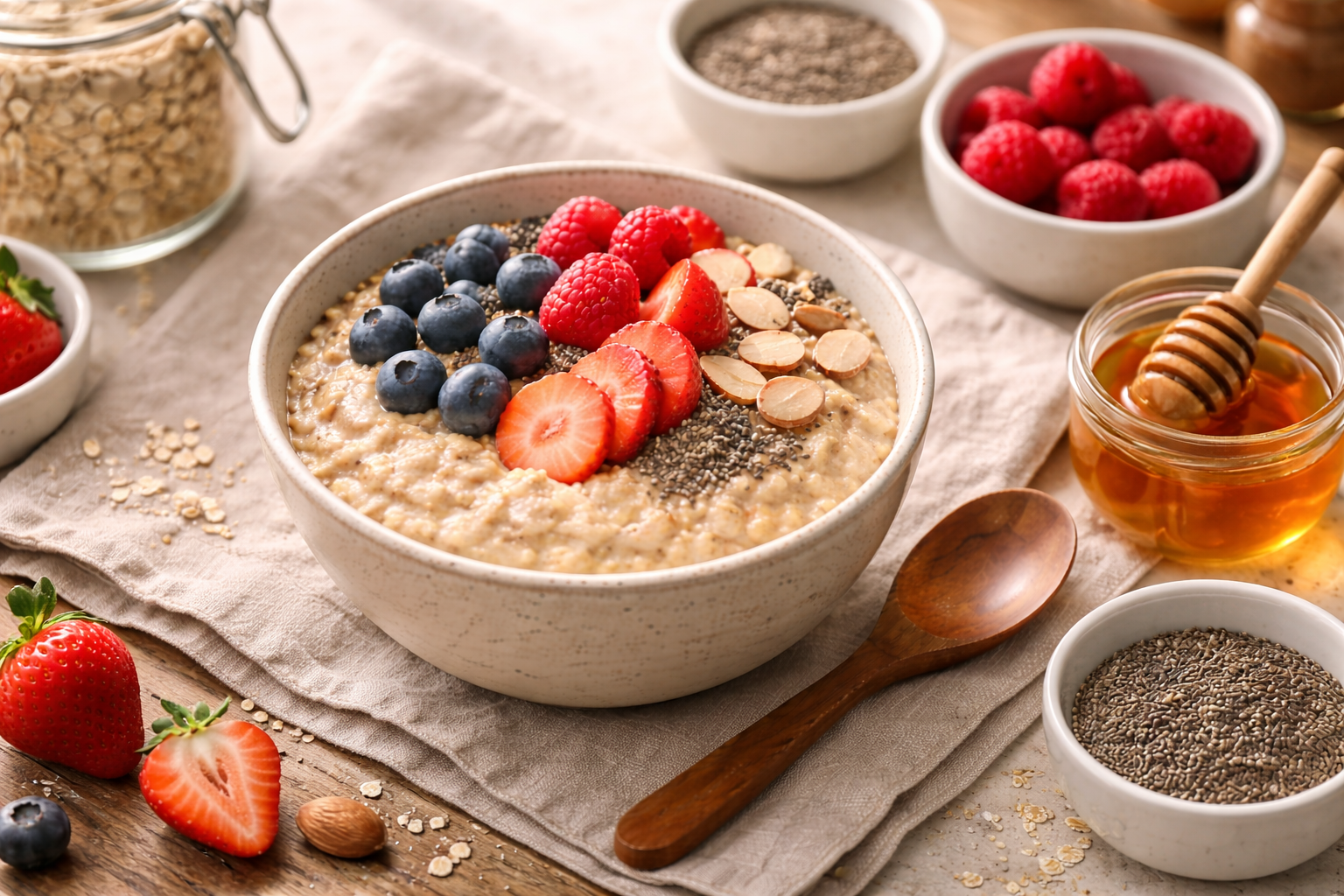
Cozy Calm Oatmeal Bowl
Ingredients
Method
- Add the rolled oats, milk, and a pinch of salt to a small saucepan.
- Place the pan over medium heat and bring to a gentle simmer.
- Lower the heat and cook for 5 to 7 minutes, stirring often, until the oats are soft and creamy.
- Turn off the heat and let the oatmeal rest for 1 to 2 minutes to thicken naturally.
- Transfer the oatmeal to a bowl.
- Top with sliced banana, blueberries, mulberries, and sesame seeds.
- Add honey, cinnamon, or other optional toppings if desired. Serve warm.
Notes
Texture & Cooking Tips
Stir frequently for extra creaminess.
If the oats become too thick, add a small splash of milk and stir.
Cooking slowly over low heat improves flavor and texture.
Variations
Minimal Honey Bowl: Skip fruit and finish with honey and cinnamon only.
Balanced Energy Bowl: Add chia seeds while cooking and top with almonds.
Dairy-Free Version: Use oat milk, almond milk, or soy milk.
Gluten-Free Option: Use certified gluten-free oats.
Nutrition (Approximate, Per Serving)
Calories: ~320
Carbohydrates: ~54 g
Protein: ~10 g
Fat: ~7 g
Fiber: ~9 g
Sugar: ~13 g
(Values vary depending on ingredients used.)
Storage
Refrigerator: Store cooked oatmeal in an airtight container for up to 4 days.
Freezer: Freeze single portions for up to 2 months.
Reheating: Reheat gently with a splash of milk, stirring until creamy.
Equipment Needed
Small saucepan
Wooden spoon
Measuring cup
Serving bowl
Mood to Meal Thought
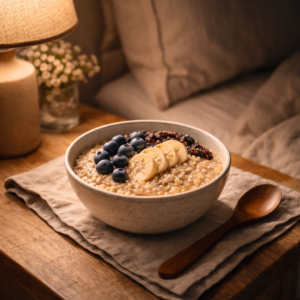
When life feels noisy, the body often asks for simplicity. Oats answer that request without asking anything back.
They don’t promise instant transformation. They offer something better: steadiness, warmth, and support—one bowl at a time.
And sometimes, that’s exactly what the mood needs.
Author

Related Posts

Zero Effort, Maximum Yum: My Go-To Lazy High-Protein Dinners When I Just Can’t
Okay, confession time. It's Tuesday night, and my brain feels…
Cook or Order? Finding Your Sweet Spot for Delicious Home Meals
The Great Dinner Dilemma: Order In or Cook Up?We’ve all…

Mini Beef Wellington Bites – Mood-Based Comfort Food for Cozy Celebrations
Some recipes are not meant for rushed days. They are…