
There are evenings when even deciding what to eat feels tiring. You don’t want anything complicated, but you also don’t want something careless. You want food that feels like it understands your mood. That’s when French onion soup quietly earns its place at the table.
This isn’t a soup you rush through. It’s one you build slowly, the way you rebuild yourself after a long day. Onions soften, deepen, and darken. Broth becomes richer. Bread and cheese turn something simple into something comforting. By the time you sit down with a bowl, the work has already done its job — not just on the stove, but on you.
This is comfort cooking, not convenience cooking.
The Mood This Soup Serves Best
French onion soup fits a very specific emotional space. It’s for moments when you want warmth without excitement, depth without heaviness, and care without effort at the table.
This soup belongs to moods like:
- emotionally drained but calm
- quietly reflective
- craving warmth, not indulgence
- needing something steady and grounding
It’s food that doesn’t perform. It supports.
Why French Onion Soup Always Feels Right
There’s a reason this soup has lasted for generations. It doesn’t rely on trends or novelty. It relies on transformation. Raw onions turn sweet. Sharp edges soften. Time does most of the work, and that makes the final bowl feel earned.
French onion soup was never meant to impress. It was meant to nourish — to stretch simple ingredients into something deeply satisfying. That intention still shows in every spoonful.
The Ingredients, Chosen for Feeling as Much as Flavor
Nothing here is complicated, but nothing is accidental either.
Butter gives the onions a soft place to land. A mix of onions creates balance — sweetness, depth, and aroma. A small touch of sugar encourages browning without making the soup sweet. Wine lifts the richness and keeps everything from feeling heavy. Herbs add quiet warmth. Beef stock brings body and comfort. A final splash of sherry rounds everything out.
The topping matters just as much. Bread gives structure. Garlic adds subtle sharpness. Cheese melts into a warm, protective layer that seals the soup emotionally as well as physically.
The Process Is the Comfort
Letting the Onions Take Their Time
This is the heart of the soup. The onions don’t rush, and neither should you. They start pale and stiff, then soften, then slowly darken. Stirring often, adjusting the heat, watching closely — this part asks for your attention, not your skill.
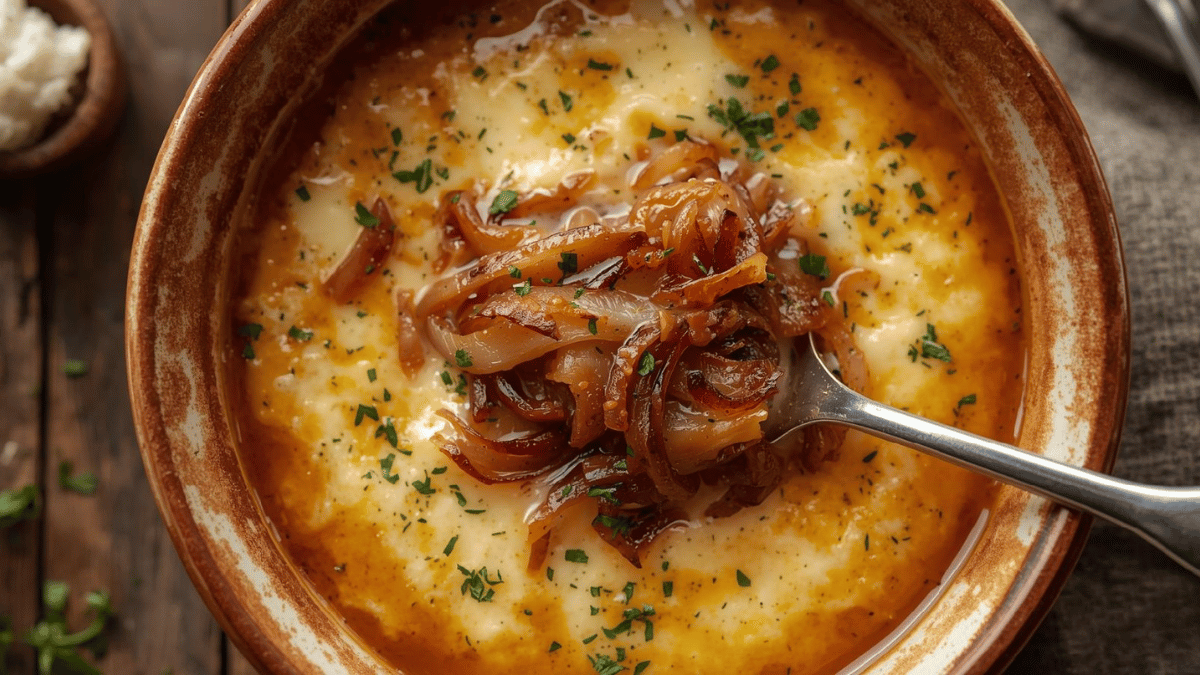
When they reach a deep brown and almost jam-like texture, you’ll know. That’s when the soup finds its voice.
Turning Onions into Soup
Wine loosens everything stuck to the pot, carrying flavor forward. Herbs and stock follow, and the soup simmers gently. No boiling. No urgency. Just time doing what it does best.
The flavors settle into each other, becoming calm and complete.
The Final Layer of Comfort
Bread is toasted until sturdy, rubbed with garlic, and placed gently on top of the soup. Cheese follows generously. Heat melts everything together, creating that familiar golden top that makes French onion soup feel finished.
What It’s Like to Eat This Soup
The first bite is warm and steady. Sweet onions, savory broth, softened bread, and melted cheese come together in a way that feels balanced and reassuring.
It’s not loud food. It doesn’t demand attention. It simply holds you where you are.
This is a bowl you eat slowly without trying.
When This Soup Belongs in Your Life
French onion soup isn’t for busy nights. It’s for intentional ones.
Make it when:
- the day has asked too much of you
- you want to cook without pressure
- you’re eating alone and want care in the bowl
- you need warmth that lingers
It doesn’t need much on the side. It stands confidently on its own.
Saving the Comfort for Another Day
The soup base stores beautifully without bread or cheese. It reheats gently and freezes well, ready for days when you need comfort but don’t have the energy to start from scratch.
Add the bread and cheese only when you’re ready to serve. That final step deserves to be fresh.
Ingredients
Method
- Caramelize the onions
- Melt butter in a heavy pot over medium-low heat. Add sliced onions and salt. Cook slowly, stirring often, until onions soften and begin to turn golden. This will take about 30–40 minutes. Sprinkle in sugar if using and continue cooking until onions are deep brown and jam-like.
- Build the flavor
- Add garlic and cook for 30 seconds until fragrant. Pour in white wine and scrape the bottom of the pot. Let it simmer until mostly reduced.
- Simmer the soup
- Add warm beef stock, bay leaves, thyme, and black pepper. Bring to a gentle simmer. Cook uncovered for 20–25 minutes to allow flavors to blend. Remove herbs and bay leaves. Stir in sherry vinegar if using. Adjust seasoning.
- Prepare the bread
- Toast baguette slices with a little butter or olive oil until crisp and golden.
- Assemble
- Ladle soup into oven-safe bowls. Place toasted bread on top and cover generously with grated cheese.
- Bake & broil
- Place bowls under the broiler until cheese melts, bubbles, and turns lightly golden. Let cool slightly before serving.
🌟 Tips for Best Flavor
Low heat and patience are key — rushed onions will never taste the same
Homemade stock gives the deepest flavor, but good-quality store stock works too
Grate cheese fresh for better melting and texture
🥖 Serving Suggestions
Serve with a simple green salad, roasted vegetables, or enjoy on its own for a deeply comforting meal.
❄ Storage
Store soup (without bread and cheese) in an airtight container in the fridge for up to 4 days. Freeze for up to 3 months. Reheat gently and add toppings fresh before serving.
A Mood to Meal Closing Thought
French onion soup reminds us that slowing down is not wasted time. It’s how depth is built — in food, in mood, in care. This isn’t a soup you rush through or multitask around. It’s one you make when you want to feel steady again.
When your mood asks for warmth, patience, and something that feels quietly supportive, this bowl answers in the most honest way possible.
Related Posts
Easy Leftover Brisket Recipes You’ll Love — Creative, Flavorful, and Family-Friendly
🍖 Easy Leftover Brisket Recipes: Turning Yesterday’s Dinner into Today’s…

Chocolate Filled Cookie Cups Recipe | Soft & Comfort Dessert
Not every dessert is meant to impress. Some are meant…

Leftover Corned Meat Recipes – 7 Delicious and Easy Ways to Use Leftovers
If you’re anything like me, you never want to waste…