
If there’s one dessert that never fails to brighten my day, it’s Mango Sago. It’s creamy, tropical, and has that perfect balance of sweetness and freshness that makes every spoonful feel like a little vacation.
The first time I tried Mango Sago was at a small Asian café during summer, and I instantly fell in love. The creamy coconut milk, chewy little sago pearls, and the rich, golden mango — it all came together like magic. From that day on, I knew this dessert had to become a regular in my kitchen.

A Little Story Behind Mango Sago
This dessert actually has quite an interesting background. It originally became famous in Hong Kong, and over the years, it spread across Asia — from Thailand to the Philippines. Every country gives it its own little twist, but the soul of the dessert stays the same: mango, sago, and coconut milk.
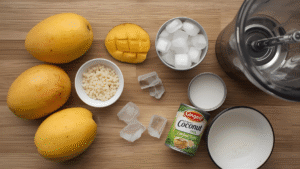
It’s one of those recipes that looks fancy but is incredibly easy to make. No baking, no complicated steps — just a bit of patience and love for tropical flavors.
Ingredients You’ll Need
Here’s what I use every time I make this creamy delight at home:
-
1 large ripe mango, diced
-
½ cup small sago pearls (tapioca pearls)
-
1 cup coconut milk
-
¼ cup condensed milk (or adjust to taste)
-
½ cup water
-
A few ice cubes or crushed ice (optional)
-
Mint leaves or extra mango chunks for topping
If you want it dairy-free, skip the condensed milk and just use more coconut milk or a drizzle of maple syrup.
How I Make It

Step 1: Cook the Sago
I start by boiling water and adding the sago pearls. It’s important to stir them so they don’t stick together. After about 10–12 minutes, when they’re mostly clear with a tiny white dot inside, I turn off the heat and cover the pot for 5 minutes. Then I rinse the pearls under cold water — that keeps them chewy, not sticky.
Step 2: Make the Mango Mix
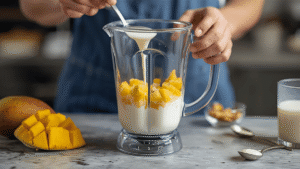
Next, I blend the mango (keeping a few cubes aside for garnish) with coconut milk, condensed milk, and water until it’s smooth and creamy. It should be thick but still pourable.
Step 3: Combine Everything
In a bowl or glass, I add a spoonful of cooked sago, pour in the mango-coconut mix, and top with mango chunks. If it’s a hot day, I add ice or chill it in the fridge for an hour before serving. The colder it is, the better it tastes.
Why I Love This Recipe
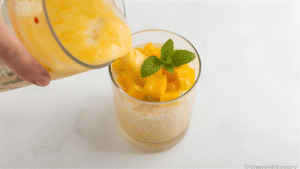
Mango Sago is one of those desserts that feels light but still so satisfying. The chewy sago gives texture, the mango adds that sunny sweetness, and the coconut milk ties it all together with creaminess.
It’s also naturally gluten-free, which makes it perfect when I’m serving guests who prefer lighter or dairy-free options. And honestly, it’s one of the easiest make-ahead desserts ever — it just gets better after sitting in the fridge.
Fun Variations I’ve Tried
Once you get the hang of it, you can play around with different twists:
-
Add pomelo or grapefruit pulp for a tangy surprise.
-
Layer it with matcha coconut milk for a stunning green-and-yellow look.
-
Swap condensed milk for maple syrup for a vegan-friendly version.
-
Mix in a spoon of chia seeds with the sago for extra nutrition.
My Little Tips
-
Don’t overcook your sago — keep it chewy!
-
Always use ripe, sweet mangoes (Alphonso and Ataulfo are my favorites).
-
Chill before serving — it makes the flavors come alive.
-
Taste as you go and adjust the sweetness the way you like it.
How I Serve It

I love serving Mango Sago in small glass cups so you can actually see the layers — the creamy base, the pearls, and the golden mango cubes on top. A tiny mint leaf or sprinkle of toasted coconut just makes it look restaurant-worthy.
Sometimes, when I have friends over, I set up a little “Mango Sago bar” with toppings like fruit bits, coconut flakes, or boba pearls so everyone can customize their dessert. It’s always a hit!
Final Thoughts
Every time I make Mango Sago, I’m reminded that the best desserts don’t have to be complicated. With just a few simple ingredients, you can create something that looks beautiful and tastes heavenly.
It’s creamy, fruity, and so refreshing — the kind of dessert that instantly puts you in a good mood. If you haven’t tried making it at home yet, this is your sign. Grab a ripe mango, cook some sago, and treat yourself to a bowl of tropical happiness. 🌴🥭
Related Posts

Easy Recipes with Lemon Curd – Simple, Sweet & Citrusy Ideas
There’s something about lemon curd that feels like sunshine in…
Night-Time Recipes for a Peaceful Sleep
There’s a special kind of quiet that settles over the…
Garlic Naan Bread Recipe for Cozy Comfort Meals
There are days when food feels like fuel, and then…